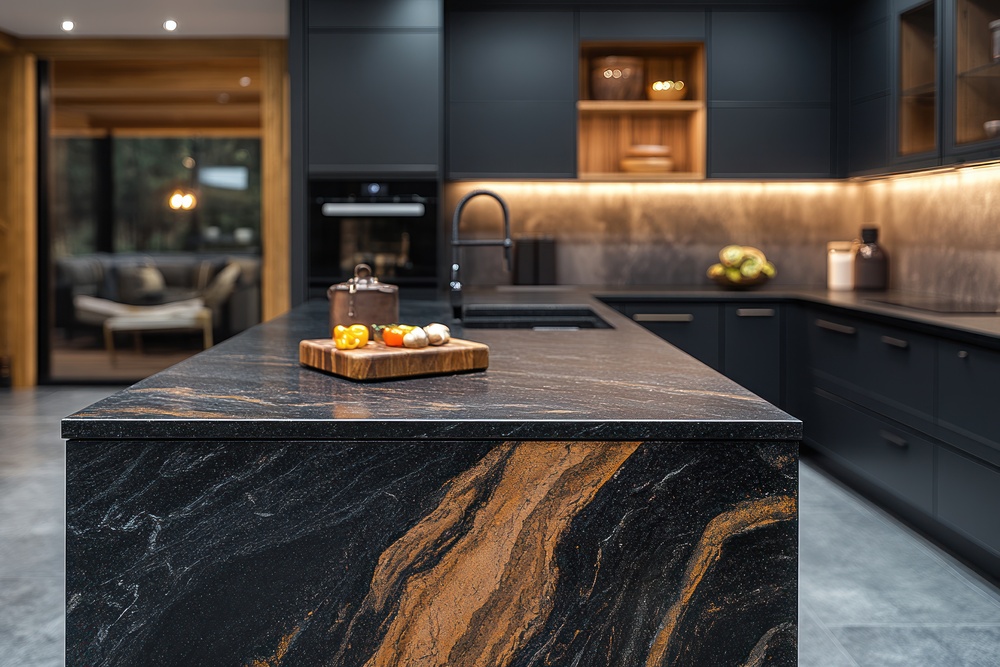
Perfectly matching kitchens are outdated. Leading designers combine different materials to create elegant and customized kitchens. This method merges aesthetics and functionality. The key is understanding how materials interact. A well-executed mix of surfaces creates depth and uniqueness. It makes your kitchen feel like it was designed just for you.
Start with a Primary Material
Choose one material to dominate your kitchen design. It sets the style for the entire space. Designers suggest using this material for 70% of your counters. Quartz is a great primary choice. It looks beautiful in high-traffic areas. It also offers consistent patterns and colors. Natural stone is elegant and timeless. Solid surfaces offer a clean look with integrated sinks and backsplashes.
Consider your lifestyle and maintenance preferences when selecting the primary materials. Families with busy lives might want durability and stain resistance. For empty nesters, appearance could be the only factor in their decision, as they don’t need to worry as much about everyday use.
Add Strategic Accent Materials
Secondary materials solve design problems and draw attention. Use them sparingly. Butcher block’s warmth and texture nicely offset the coolness of stone. It works especially well for prep areas where you actually want knife-friendly surfaces. The natural wood grain softens stark modern designs while providing practical cutting space.
Metal surfaces bring an industrial edge and exceptional heat resistance. Stainless steel resists heat from hot pots near cooktops. Copper’s patina gains beauty over time. Concrete is highly customizable and affordable. Skilled artisans create colors and textures that complement your primary material while adding unique personality your neighbors can’t copy.
Balance Visual Weight Carefully
Different materials carry different visual weights in your design. Dark granite feels heavy and substantial. Light quartz appears airy and spacious. Mixing requires balancing these characteristics thoughtfully.
Spread heavy materials around the area. This avoids an unbalanced kitchen. For example, the people at Bedrock Quartz say that a massive granite island paired with light quartz perimeter Bedrock Quartz countertops creates pleasing contrast without overwhelming the room.
Texture variations add interest without transforming colors. Pairing polished and honed finishes of the same material creates subtle depth. Mixing smooth quartz with textured concrete provides a dramatic contrast that still feels cohesive. Pattern mixing requires extra care and restraint. Solid or subtle colors work well with veined natural stone. Too many patterns overwhelm the eye.
Consider Practical Placement
Different materials excel in different kitchen zones. Smart placement boosts beauty, function, and reduces future maintenance. Use heat-resistant materials near hot cooking surfaces. Position stain-resistant surfaces in heavy prep zones where spills happen regularly. Reserve more delicate materials for display areas that see lighter use.
Transition points between materials need careful planning. Smooth transitions look intentional and professional. Abrupt changes appear accidental and sloppy. Use trim pieces, reveals, or natural breaks like cabinet edges to create clean separations.
Height differences can define zones effectively while accommodating different material thicknesses. Raised bars or lowered prep areas naturally separate different surfaces without awkward transitions.
Maintain Design Cohesion
Color makes mixed materials appear deliberate. Pull colors from your primary material to guide secondary choices. Natural stone veining might inspire wood stain colors or metal finishes throughout the space.
Finish consistency helps different materials feel related. Pairing polished stone with glossy wood finishes creates harmony. Mixing matte and glossy finishes randomly looks disconnected and confusing.
Style consistency matters more than material matching. Traditional profiles and edge treatments make different materials feel like they belong together. Modern, clean lines create cohesion across diverse surface types.
Conclusion
Mixing countertops successfully requires confidence and vision. Design a kitchen that suits your style and needs. Successful mixed-material kitchens seem both surprising and obvious.