
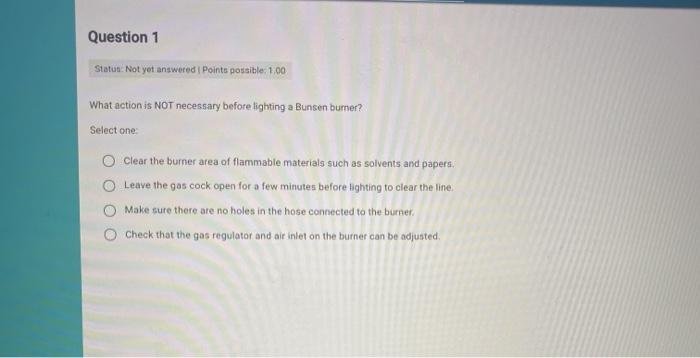
Before lighting a Bunsen burner, the one action that is not necessary is closing the air hole. This may come as a surprise to many, as adjusting the air hole is a common step in using a Bunsen burner. However, leaving it open can actually facilitate the flow of air needed for a clean combustion. By skipping this step, you can ensure a successful and efficient lighting process. Remember, what action is not necessary before lighting a Bunsen burner? Closing the air hole!

What Action Is Not Necessary Before Lighting a Bunsen Burner?
Introduction
Imagine you are in a science lab, ready to conduct an exciting experiment. One essential tool you will likely use is a Bunsen burner. It’s a fascinating device that helps scientists heat substances. But do you know what action is not necessary before lighting a Bunsen burner? Let’s dive into this important topic and discover the answer!
Understanding the Bunsen Burner
Before we explore what you don’t need to do before lighting a Bunsen burner, let’s understand how this magical tool works. The Bunsen burner is a small gas burner used in science labs. It produces a hot, sootless flame by allowing air to enter at the base along with the fuel gas.
Components of a Bunsen Burner
A Bunsen burner consists of a metal base, a vertical metal tube, and an adjustable air hole. The base connects to a gas source, and the vertical tube is where the flame forms. By controlling the airflow using the adjustable air hole, scientists can adjust the type of flame produced.
Importance of Proper Usage
Using a Bunsen burner correctly is crucial for safety and efficient heating. It’s essential to follow proper procedures and know what actions to avoid to prevent accidents and ensure successful experiments.
What Action Is Not Necessary?
Now, let’s get to the heart of the matter – what action is not necessary before lighting a Bunsen burner? The answer may surprise you: you do not need to shake or tilt the Bunsen burner before lighting it.
Why You Shouldn’t Shake or Tilt
Shaking or tilting a Bunsen burner can be dangerous for several reasons. First, doing so may disrupt the flow of gas and air, leading to an unstable flame. An unstable flame can cause accidents or inconsistent heating, affecting the experiment’s results.
Proper Lighting Procedure
Instead of shaking or tilting the Bunsen burner, follow these steps for safe and efficient lighting:
1. Ensure the gas line is properly connected to the burner.
2. Adjust the air hole to the desired position.
3. Use a striker to ignite the gas at the top of the burner tube.
4. Adjust the air hole further to achieve the desired flame type.
Common Misconceptions
There are some common misconceptions about Bunsen burners that you may have heard. Let’s debunk a few of them:
Misconception 1: Blowing Out the Flame
Some people believe that blowing out a Bunsen burner flame is the best way to turn it off. However, this is incorrect. The proper way to extinguish a Bunsen burner is to turn off the gas source using the valve.
Misconception 2: Maximum Flame for Quick Heating
Another misconception is that using the maximum flame setting will heat things faster. In reality, using a high flame can lead to overheating, combustion issues, and unsafe conditions. It’s essential to adjust the flame according to the heating requirements of the experiment.
In conclusion, knowing what action is not necessary before lighting a Bunsen burner is crucial for safe and successful experiments in the lab. By understanding the proper procedures and avoiding common misconceptions, you can harness the power of this amazing tool effectively.
Remember, when using a Bunsen burner, always prioritize safety, follow proper guidelines, and seek guidance from a teacher or supervisor if you have any doubts. Now that you’re equipped with this knowledge, go forth and conduct exciting experiments with confidence!
BUNSEN BURNER, LUMINOUS AND NON LUMINOUS FLAME
Frequently Asked Questions
What should you do before lighting a Bunsen burner?
Before lighting a Bunsen burner, it is essential to ensure that the burner is connected to a gas source and the gas flow is adjusted to the desired level. Additionally, make sure the air hole at the base of the burner is open or adjusted based on the type of flame needed.
Why is it important to check the gas connection before lighting a Bunsen burner?
Checking the gas connection before lighting a Bunsen burner is crucial to prevent any potential gas leaks or safety hazards. Ensuring a secure connection helps in maintaining a stable and safe flame during the experiment.
Can you light a Bunsen burner without adjusting the gas flow?
No, it is not advisable to light a Bunsen burner without adjusting the gas flow. Proper adjustment of gas flow is necessary to control the intensity of the flame and prevent any accidents or fluctuations in the flame during the heating process.
Final Thoughts
Before lighting a Bunsen burner, ensure gas is flowing smoothly but do not light it with your face close. Adjust the collar to control the flame’s intensity. Finally, strike a match or use a striker to ignite the burner.
In conclusion, when lighting a Bunsen burner, it is not necessary to turn on the gas without first checking for a smooth flow. This simple precaution can prevent accidents and ensure a safe laboratory environment.


